Volume 9, Issue 14 July 17, 2025

On Monday, fifteen of our team members joined another 400 landscape professionals from across the country for the National Association of Landscape Professionals (NALP) Renewal & Remembrance service event in Washington, DC. Working with the National Parks Service (NPS), volunteers performed assignments at Arlington National Cemetery and the Franklin Delano Roosevelt Memorial along the Tidal Basin. I started attending this event 20 years ago and have since invited my staff to join me for this important day of service in our nation’s capital.
We will also share some important insights that can keep your landscape healthy and thriving as we move deeper into the summer season. Together we can keep your landscape beautiful and resilient all season long. Thanks for reading! -Shayne
renewal & remembrance
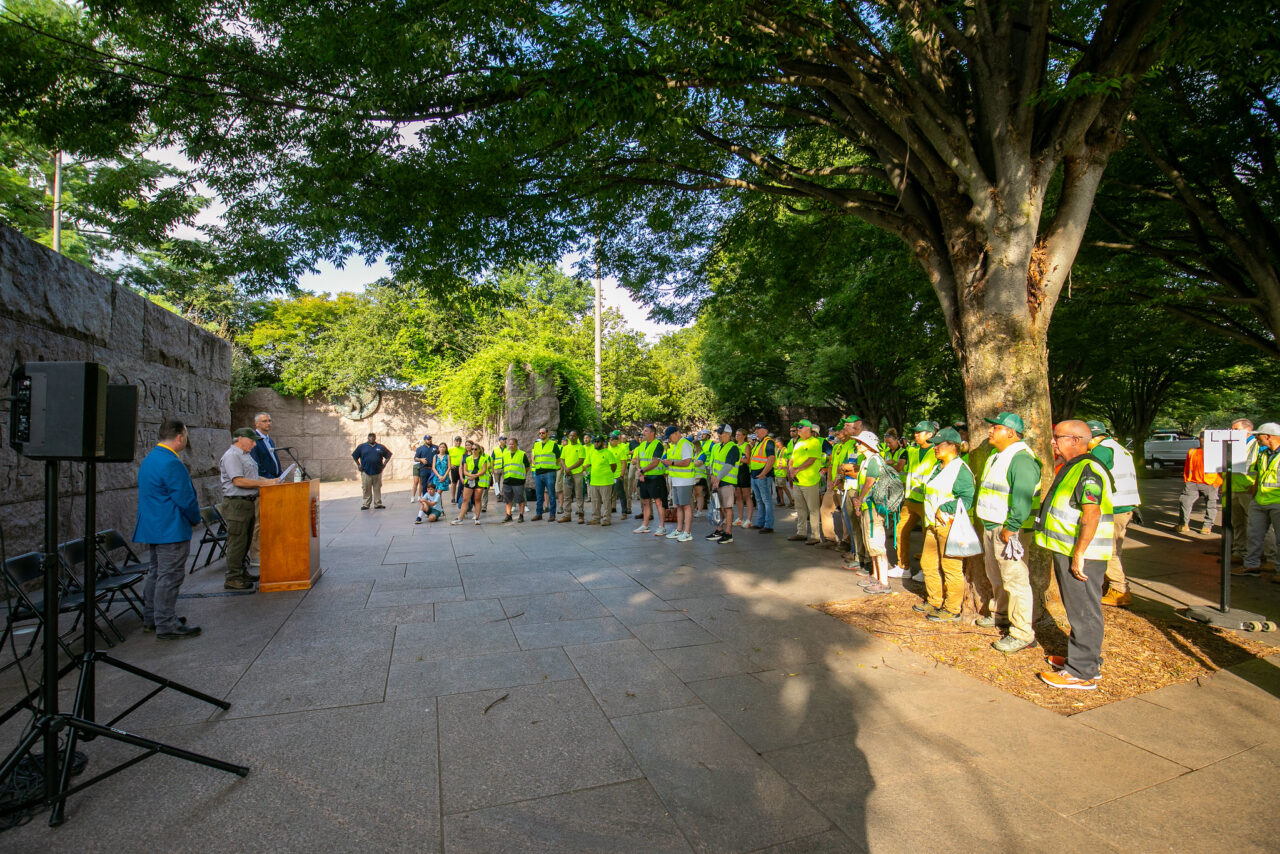
On Monday morning, July 14, over 400 landscape professionals from around the country arrived at their specified sites at Arlington National Cemetery in Arlington, VA, and the Franklin Delano Roosevelt Memorial on the National Mall to help revitalize the grounds at these important sites.
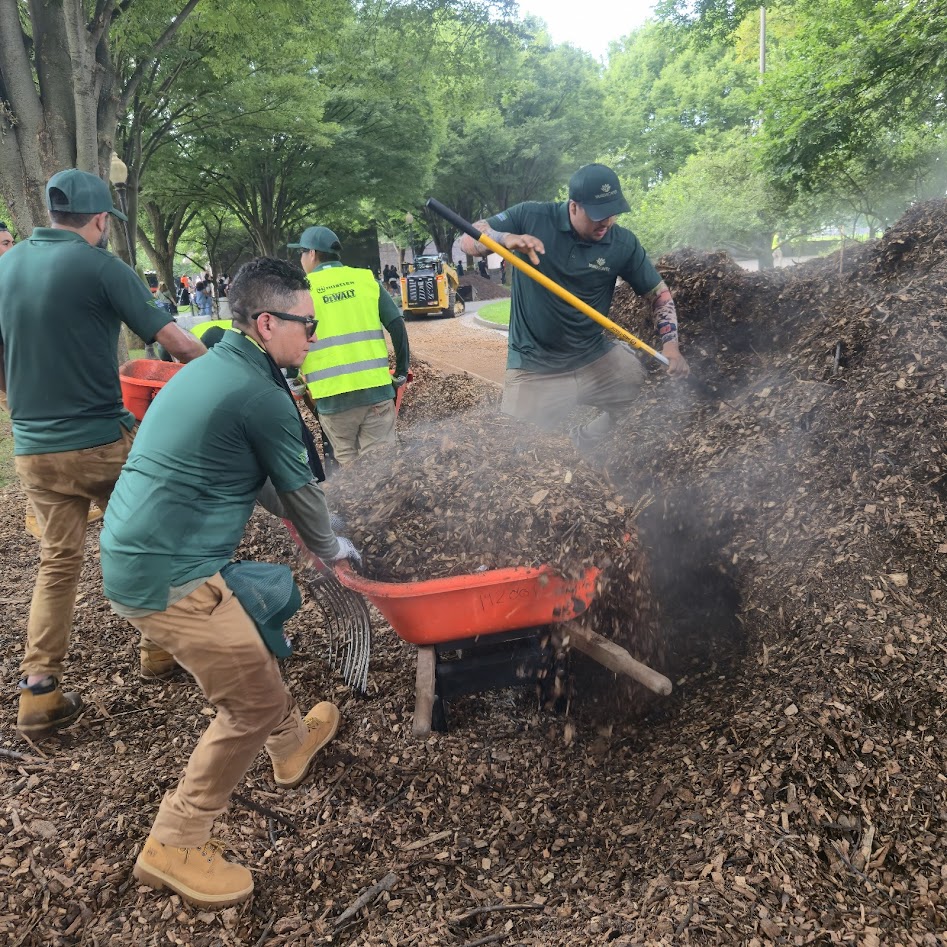
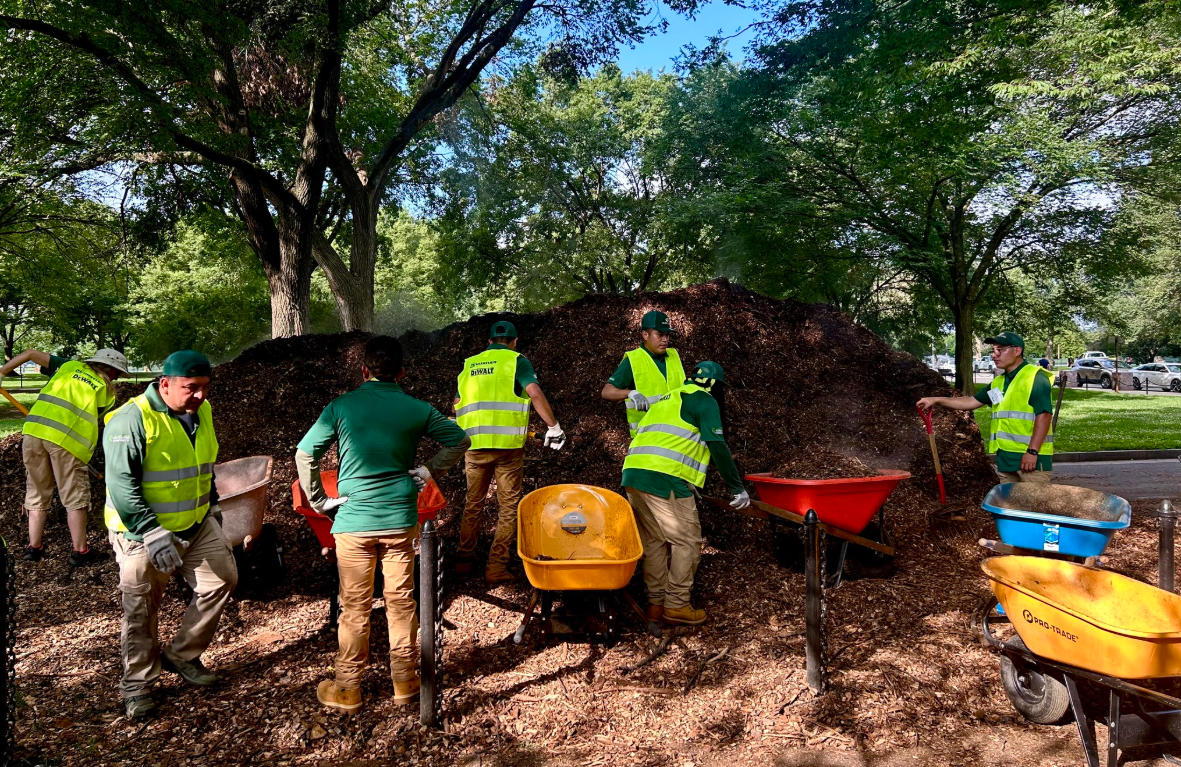
Our team was assigned to the FDR Memorial with about another 120 volunteers. After a small ceremony and remarks from the NALP and the NPS, volunteers got straight to work! Four projects were scheduled including pruning of the historic cherry trees, a fence removal project, and stump removals. The YardScapes team, along with three other teams at different areas of the memorial, were tasked with moving and spreading four tractor trailer truckloads of wood chips. Our team of twenty had 250 yards (approx. 50 TONS) of wood chips to move and spread under the trees in our section at the memorial.
The FDR Memorial encompasses 7.5 acres and has four separate outdoor “rooms,” each representing one term FDR served. It is located among the cherry trees along the Tidal Basin between the Thomas Jefferson and Martin Luther King, Jr. Memorials. Opened to the public in 1997, it is also the first memorial to be wheelchair accessible.
YardScapes is already looking forward to the 30th Anniversary of this distinguished volunteer initiative in 2026. It is always a privilege to support this effort while also contributing to the health and beauty of “America’s Front Yard.” Contributing our time and expertise to such a powerful cause is both humbling and inspiring, and we are grateful for the opportunity to give back through our industry.
Click HERE to see all the event photos from NALP.
Click HERE for NBC Washington’s News Story featuring Shayne!

DRAINAGE ISSUES
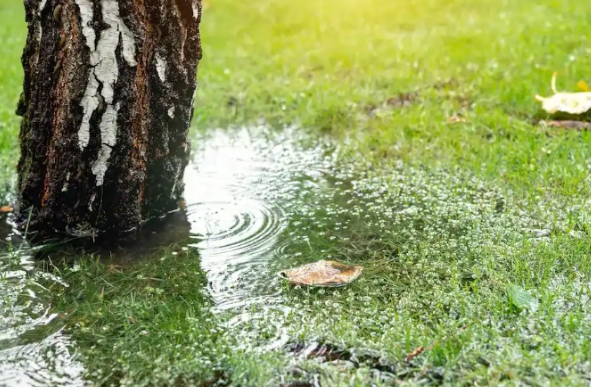
Drainage problems are one of the most overlooked yet critical aspects of home landscape maintenance. Poor drainage can lead to a host of issues—from soggy lawns and dying plants to foundation damage and basement flooding.
Recognizing the signs of drainage trouble early can save you thousands in repairs and help maintain the beauty and health of your outdoor spaces.
After a rainstorm, if you notice standing water, soil erosion, or mulch washing away, let us know because these are common red flags. Water pooling near your home’s foundation or in low spots of your yard can indicate that your property isn’t draining properly. Over time, this can weaken your home’s structure and create ideal conditions for mold and mildew.
Fortunately, we offer several effective solutions to drainage issues. These are just a few ways to redirect or handle excess water:
- Grading and Sloping Adjustments
- French Drains
- Dry Creek Beds
- Swales & Berms
- Rain Gardens and Planting Native
- Permeable Pavers
- Soil Amendment
We can help diagnose and resolve drainage problems with long-term, sustainable solutions. Every property is unique, so it’s important to assess the specific causes and tailor the solution accordingly. Whether you’re dealing with minor puddles or major runoff issues, our team is ready to help you reclaim your yard and protect your investment.
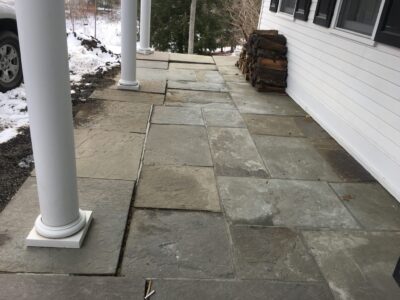
SUMMER PRUNING
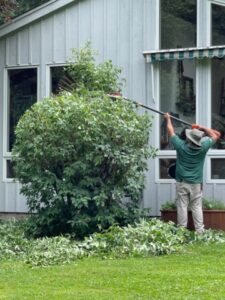
Summer pruning plays a crucial role in maintaining the health and aesthetics of your trees and shrubs.
Unlike winter pruning, which focuses on structural shaping, summer pruning is more about controlling growth and removing unwanted or diseased branches. This is especially important for fast-growing plants that can become unruly during the growing season. By thinning out dense foliage, air circulation and sunlight penetration are both increased, which also helps reduce the risk of fungal diseases.
With our humid summers, pruning also helps manage pests. Removing infested or damaged limbs early can prevent the spread of insects like aphids or borers. For fruit trees, summer pruning can enhance fruit quality by directing the plant’s energy into fewer, healthier fruits rather than excessive foliage. It also makes harvesting easier and more efficient.
Timing is key—pruning should be done after the spring growth flush but before the intense heat of late summer. Always use clean, sharp tools to make precise cuts, and avoid heavy pruning during drought conditions to minimize stress on the plants.
Here are a few plants that benefit from summer pruning.
Spring-Flowering Shrubs
- Shrubs like lilacs, forsythia, azaleas, and rhododendrons should be pruned in early summer, right after they finish blooming. Pruning too late in the season can remove next year’s flower buds.
Fruit Trees
- Apple, pear, and peach trees benefit from light summer pruning to improve air circulation and sunlight exposure, which helps fruit ripen and reduces disease.
Evergreen Shrubs
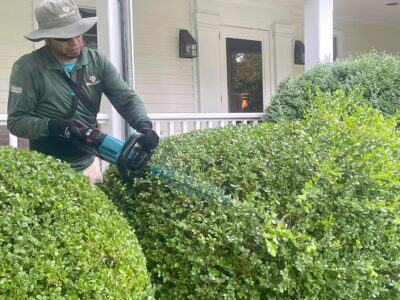
- Plants like boxwood, yew, and holly can be lightly shaped in early to mid-summer. Avoid heavy pruning late in the season, as new growth may not harden off before winter.
Vines
- Wisteria and grapevines should be pruned in mid to late summer to control their vigorous growth and encourage better flowering or fruiting next year.
Perennials and Annuals
- Deadheading spent blooms on roses, coneflowers, and daylilies encourages continued blooming. Cutting back leggy annuals like petunias can also rejuvenate their appearance.
Shade-Loving Native Perennials
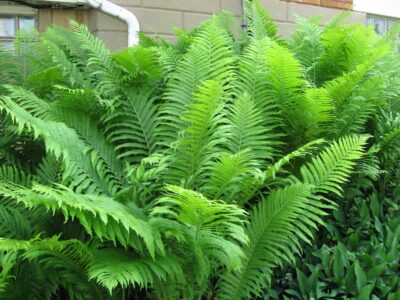
Here is a short list of some perennials, native to Connecticut, that prefer full to partial shade. They make lovely additions to shade and woodland gardens or to help fill in areas where nothing else seems to grow due to the lack of sunlight. Native plants also have much deeper roots to help stabilize soil and resist drought conditions.
- ABOVE: Ostrich Fern (shade, average to wet soil)
- Wild Ginger (full to partial shade, dry to moist soil)
- Foamflower (full to partial shade, average to moist soil)
- Jack-in-the-Pulpit (shade, average to moist soil)
- Blue Cohosh (shade, average to moist soil)
- Wild Columbine (partial shade, average to moist soil)
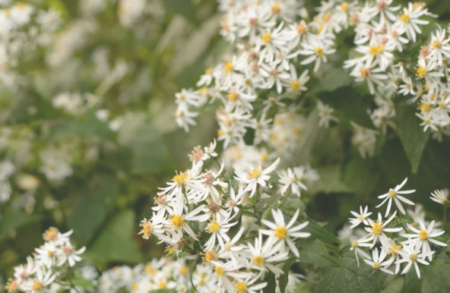
- BELOW: White Wood Aster (shade under trees, dry to average soil)